The Weight We Carry Across Oceans: Teaching Indian Muslim Children About Partition and Inherited Pain
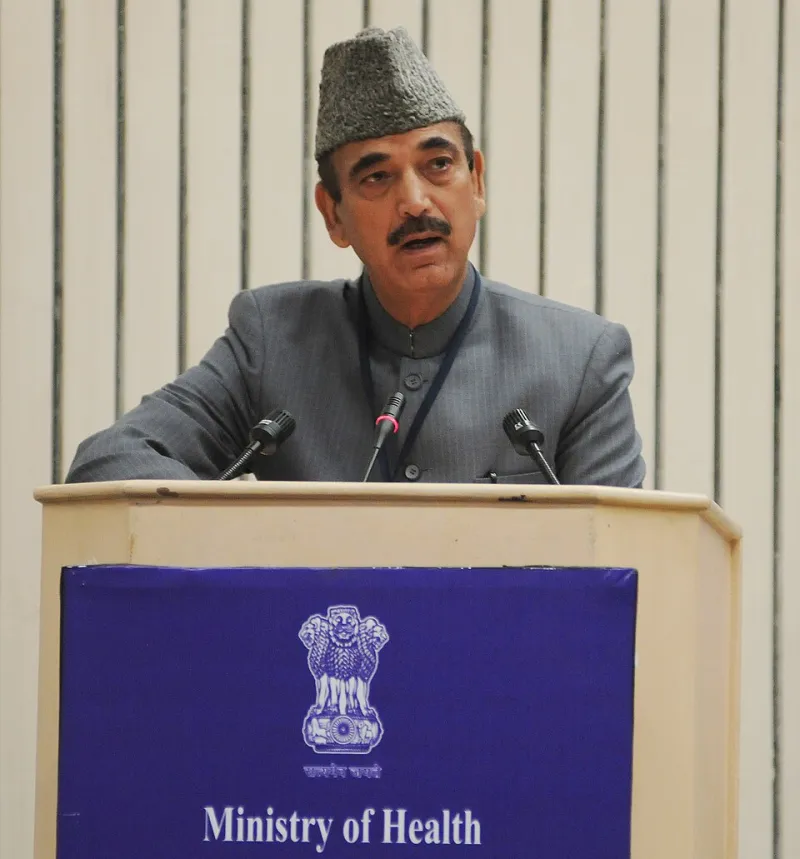
Photo: Ministry of Health and Family Welfare, GODL-India, via Wikimedia Commons
Samira was nine years old when she asked her grandmother why she sometimes cried while watching old Hindi films. Her grandmother, who had been born in what is now Pakistan and had crossed the border as a child during the chaos of 1947, paused for a long time before answering. "Those places in the movies," she said finally, in Urdu, "look like the places I had to leave."
Samira is now thirty-four and lives in the Chicago suburbs. She has a seven-year-old daughter of her own. And she is still figuring out how to answer the questions she knows are coming.
"I don't want to traumatize her," Samira said during a recent conversation. "But I also don't want her to grow up not knowing where she comes from. Those two things feel like they are always in tension."
For Indian Muslim American families, this tension is one of the defining quiet struggles of immigrant life — not the dramatic, visible kind that makes headlines, but the intimate, daily kind that plays out over dinner tables and bedtime stories and long car rides. The Partition of British India in 1947, which displaced an estimated fourteen million people and killed somewhere between two hundred thousand and two million, left a scar on the subcontinent's Muslim population that has never fully healed. For families who eventually made their way to the United States, that scar traveled with them — embedded in family stories, in silences, in the particular way certain elders flinch at certain words.
How that inheritance is passed — or not passed — to American-born children is a question with no easy answers.
What the History Books Leave Out
American school curricula, even in the most progressive districts, offer Indian Muslim children almost nothing on Partition. South Asian history, when it appears at all, tends to focus on Gandhi, British colonialism in broad strokes, and perhaps a paragraph on independence. The communal violence of 1947, the mass displacement, the particular vulnerability of Muslim communities on both sides of the newly drawn border — these details rarely make the cut.
This curricular silence places an enormous burden on families. Parents who are themselves only one or two generations removed from Partition — and who may have absorbed their own family's trauma through osmosis rather than explicit conversation — are expected to become history teachers, grief counselors, and identity architects simultaneously.
"The school is not going to do this for you," said Dr. Nadia Hussain, a child psychologist based in New Jersey who works extensively with South Asian American families. "Parents have to decide: what do I tell, how much do I tell, and when? And most of them never had a model for how to do that, because their own parents didn't talk about it either."
The Silence That Speaks
In many Indian Muslim households, Partition was not discussed — not because it was forgotten, but because the pain was too immediate, too raw, too complicated to translate into words that could be handed to children without harm. Grandparents who witnessed communal violence firsthand often chose protective silence. Parents who inherited that silence often passed it on, not knowing what else to do.
But silence, as therapists note, is never truly empty. Children absorb what is not said as much as what is. They sense the weight behind certain subjects. They notice which questions make adults go quiet.
"My father never talked about Partition directly," said Imran, a software engineer in the Dallas area whose family emigrated from Hyderabad. "But I grew up knowing it was there. It shaped how he talked about India, about Pakistan, about Muslims in India. It was in everything, even when it wasn't named."
Imran's teenage son, born in Texas, has begun asking questions about why his grandfather seemed to hold a particular sadness about India — a country the boy has visited only twice and associates mainly with good food and loving relatives. Imran is trying to find language that honors the complexity.
"I want him to love India," Imran said. "It is part of him. But I also want him to understand that loving a place doesn't mean pretending its history was simple."
Finding the Right Frame
Educators who work with South Asian American students suggest that age-appropriate honesty — paired with a strong emphasis on resilience and continuity — tends to serve children better than either total silence or unmediated exposure to historical horror.
"You don't start with the violence," said Fatima Khan, a middle school social studies teacher in suburban New Jersey who has developed supplementary curriculum materials on South Asian history for her district. "You start with the family. You start with 'our family comes from a place, and that place changed, and here is what we carried with us.' The history comes in gradually, as the child can hold it."
This narrative approach — anchoring historical trauma in personal and familial story — aligns with what trauma researchers call "coherent narrative," the practice of helping children make sense of difficult events by placing them within a larger story of survival and meaning. It does not minimize the pain, but it refuses to let the pain be the only thing.
Some families have found community resources helpful. Cultural organizations, Islamic Sunday schools, and South Asian heritage programs in cities like Chicago, Houston, and the New York metropolitan area have begun offering programming specifically designed to introduce younger generations to Partition history in structured, supported settings. These spaces allow children to encounter the history alongside peers, guided by educators who are trained to handle emotional responses.
Separating Inherited Pain from American Identity
One of the more delicate challenges Indian Muslim American parents describe is helping their children understand that the communal tensions of the subcontinent — between Hindus and Muslims, between India and Pakistan — do not have to define their relationships in America.
Many Indian Muslim American children have Hindu Indian American friends, Sikh classmates, Pakistani American cousins. They navigate a social world that is, in some ways, more integrated than anything their grandparents knew. Parents want to honor the history without poisoning the present.
"I told my daughter about Partition," said Ruksana, a physician in the San Francisco Bay Area. "And then I told her that her best friend's grandmother, who is Hindu, probably has her own family stories from that time that are just as painful. That the violence touched everyone. I want her to understand history without turning it into a reason to distrust people."
This is not always easy. In an era when anti-Muslim sentiment — including from some corners of the Indian American community — remains a lived reality for many families, the line between historical awareness and contemporary vigilance can blur. Parents are trying to equip their children with knowledge without arming them with suspicion.
What We Owe the Next Generation
There is no consensus answer to how much inherited trauma a parent should share, or how early, or in what form. But across the conversations gathered for this piece, one sentiment recurred consistently: the goal is not to transfer the wound, but to transmit the wisdom the wound produced.
Resilience. Community. The understanding that identity can survive displacement. The knowledge that belonging is something you build, not something you are simply given.
"My grandmother lost her home," Samira said. "But she built another one. And then another one, here. I want my daughter to know that story — the whole story, the loss and the building both. That is her inheritance too."
The questions will keep coming. The children will keep asking. And across suburban America, in living rooms and car pools and kitchen tables, Indian Muslim parents are learning — imperfectly, courageously — how to answer them.