Neither Here Nor There: The Unfinished Identity of Young Indian Muslim Americans
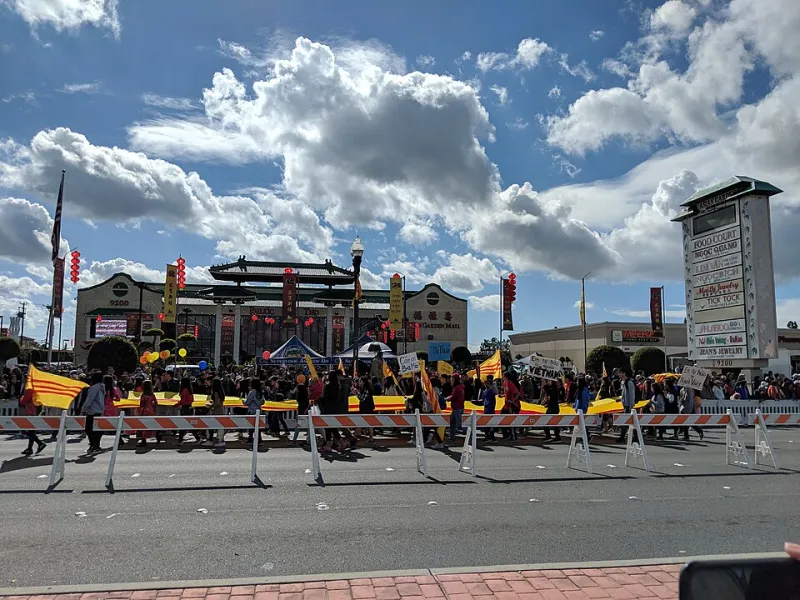
Photo: DHN, CC BY-SA 4.0, via Wikimedia Commons
Opinion
Somewhere between her mother's insistence that she attend every Sunday biryani gathering with aunties who have opinions about her unmarried status, and her coworkers' cheerful assumption that she must be "basically Hindu" because she's Indian, Zara Mirza learned to exist in the hyphen.
Zara, 27, grew up in the suburbs of Atlanta, the daughter of a software engineer from Hyderabad and a schoolteacher from Lucknow. She fasts for Ramadan, follows the news from Palestine with anguish, votes in every election, and recently declined a rishta her parents found through a community matrimonial app — not because the prospective match was objectionable, but because she had not yet finished figuring out who she was. "How do I choose a partner for life," she asked me, "when I'm still negotiating with myself about what my life is supposed to look like?"
Zara's experience is not unique. It is, in fact, something close to a defining condition for second-generation Indian Muslim Americans — a generation shaped by the particular tensions of being simultaneously too American for the old country and too Muslim for mainstream America.
The Weight of Dual Expectation
The immigrant bargain that shaped the first generation of Indian Muslims in America was, in many ways, a remarkably successful one. Drawn disproportionately from educated professional classes — doctors, engineers, academics, businesspeople — these immigrants built stable, prosperous lives and created community institutions, from Islamic centers to cultural associations, designed to preserve what they had brought with them while navigating what they had arrived into.
But the bargain came with terms. Success was defined in specific, legible ways: professional achievement in high-status fields, marriage within the community and faith, maintenance of linguistic and cultural ties to the subcontinent, and a form of public religiosity that was visible enough to signal identity but careful enough not to attract unwanted attention in a post-9/11 America.
For the second generation, inheriting these terms has proven considerably more complicated than their parents anticipated.
A 2022 survey conducted by the Institute for Social Policy and Understanding found that Muslim Americans between the ages of 18 and 35 report significantly higher rates of anxiety around religious identity compared with older generations — not because they are less faithful, but because the terrain on which faith must be practiced has become more contested, both externally and within their own families. Among South Asian Muslim respondents specifically, 61 percent reported experiencing tension between family expectations and personal values around career, relationships, or lifestyle choices.
Faith in the Age of Contradiction
For many young Indian Muslim Americans, the relationship with Islam itself has become more intimate, more personally negotiated, and more explicitly political than the version modeled by their parents. This is not a story of declining religiosity — quite the opposite. Surveys consistently show that younger Muslim Americans are more likely than their parents to describe religion as central to their identity. But the content of that religious identity looks different.
Imam Khalid Rashid, who leads a diverse Muslim community in the northern Chicago suburbs with a significant Indian American membership, has observed this shift closely over fifteen years of ministry. "The young people in my congregation are not less Islamic than their parents," he told me. "They are more directly engaged with Islamic ethics as a framework for understanding the world. They want to know what their faith says about Palestine, about caste, about climate change, about consent. They are not satisfied with 'that's not our concern.'"
This engagement with Islam as a comprehensive ethical framework rather than primarily a cultural inheritance creates friction with older community members for whom the preservation of specific practices and social structures is itself the religious obligation. The debate over arranged versus self-selected marriage is perhaps the most visible manifestation of this friction, but it is hardly the only one.
Caste — a subject that many Indian Muslim families consider irrelevant to Islamic practice while simultaneously factoring it into marriage decisions — has become an increasingly charged conversation among second-generation activists. Young Indian Muslim Americans who have engaged with broader South Asian American progressive movements often return to their own communities with uncomfortable questions about the persistence of caste hierarchy within Muslim families that explicitly reject its legitimacy.
The Political Awakening
If there is one arena in which second-generation Indian Muslim Americans have most visibly differentiated themselves from their parents' generation, it is politics. The elder generation's pragmatic accommodation with Democratic Party loyalty is giving way to something more demanding and less predictable.
Nadia Rahman, 24, is a graduate student in public policy at the University of Michigan and a co-organizer of a campus coalition that pressed university administrators to disclose and divest from defense contractors with Israeli government contracts. She grew up in a household where her parents voted reliably Democratic and considered political engagement largely a matter of civic obligation. "For my parents, voting was the end of the story," she said. "For me and my friends, it's where the story starts."
This generational shift in political temperament has been accelerated by the Gaza crisis in ways that are still unfolding. For young Indian Muslim Americans, the conflict has functioned as a kind of political crystallization — making visible the gap between the values they were raised with and the positions of institutions they were expected to trust. The result has been not disillusionment with politics, but a more rigorous and demanding form of political engagement.
Kashmir, too, occupies a formative place in the political consciousness of second-generation Indian Muslim Americans in ways that sometimes surprise their parents, who often maintained a careful silence on the issue to preserve social relationships within diverse South Asian communities. Younger Americans, less constrained by these social calculations, have been more willing to name what they see — and to accept the fractures that naming it sometimes produces.
Redefining the Hyphen
What does it mean to be Indian and Muslim and American in 2025? The second generation is answering this question in ways that resist tidy summary. Some are finding community in specifically Indian Muslim cultural organizations that celebrate Urdu poetry, Mughal history, and Deccani cuisine as inseparable from their faith identity. Others are building bridges with Arab, Somali, and African American Muslim communities, constructing a pan-Islamic American identity that transcends ethnic origin. Many are doing both simultaneously.
Zara Mirza, the young woman from Atlanta whose dilemma opened this piece, eventually did attend that Sunday biryani gathering. She also, the following week, attended a rally for Palestinian solidarity organized by a coalition of Muslim student groups. She is still figuring out the rishta question.
"I think the mistake people make," she told me, "is assuming that being caught between worlds means you're lost. I'm not lost. I'm just building something that doesn't have a map yet."
That construction project — imperfect, unfinished, and deeply necessary — is the defining work of a generation. And if the history of immigrant communities in America tells us anything, it is that the children who build without a map are often the ones who create the terrain that everyone else eventually learns to navigate.