Organizing Beyond the Pew: How Indian Muslim Americans Are Constructing Their Own Political Machine
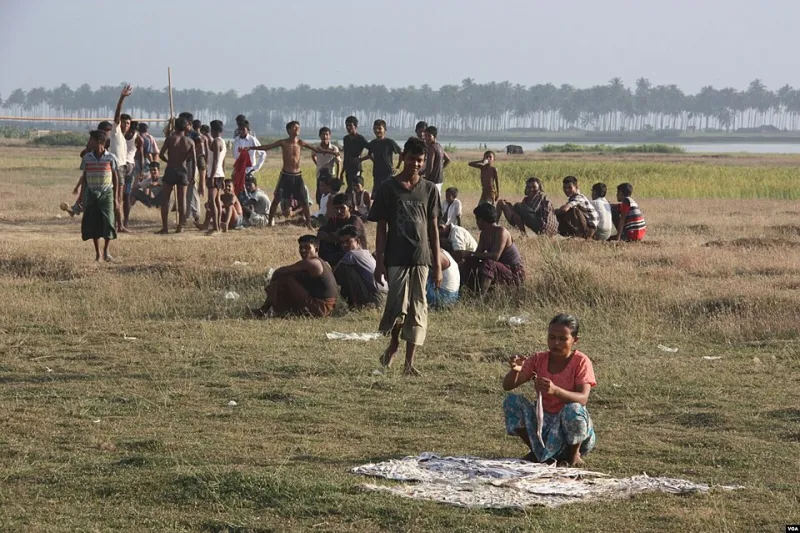
Photo: Daniel Schearf, Public domain, via Wikimedia Commons
For decades, the political calculus for Indian Muslim Americans was relatively straightforward: cast a reliable vote for Democratic candidates, trust that shared values around pluralism and civil rights would yield reciprocal protection, and hope that the party's broader coalition would eventually make room for community-specific concerns. That calculus is now being systematically dismantled — not out of cynicism, but out of a hardening strategic clarity.
Across major metropolitan areas where Indian Muslim Americans have established significant demographic weight — the San Francisco Bay Area, the New York-New Jersey corridor, metropolitan Chicago, and the Houston suburbs — community leaders are quietly, and sometimes not so quietly, building political infrastructure that does not depend on the goodwill of any single party. The mosque is still central to this effort. But it is no longer the end of the story.
From House of Worship to Civic Hub
The transformation of the American mosque into a civic organizing space is not a new phenomenon, but Indian Muslim American communities have accelerated this evolution with particular sophistication. In Northern California, the Islamic Society of the East Bay has hosted candidate forums that draw local city council members and state assembly representatives specifically because organizers have demonstrated, precinct by precinct, that their congregants vote in off-cycle elections — the races where mobilized minorities can genuinely move outcomes.
"We stopped waiting to be invited to the table," said one community organizer in Fremont, California, who asked not to be identified by name due to professional considerations. "We built our own table, and now people come to us."
This shift in posture represents something qualitatively different from previous generations of Muslim American civic engagement. Earlier efforts often centered on voter registration drives and get-out-the-vote operations that ultimately fed existing party structures. The current model is oriented around leverage — the deliberate cultivation of a reputation for electoral discipline that makes Indian Muslim American precincts something politicians must actively court rather than passively assume.
The Issues That Forged a Bloc
If there is a single catalytic force behind this new political independence, it is the intersection of three issues that have exposed the limits of conventional Democratic loyalty: the ongoing conflict in Gaza, the international community's muted response to the situation in Kashmir, and the persistence of domestic threats to religious freedom under successive administrations.
Gaza, in particular, has served as a profound political education for many Indian Muslim Americans who previously gave Democratic leadership considerable benefit of the doubt on foreign policy. The Biden administration's sustained military support for Israel's military campaign, even as civilian casualties mounted, produced a crisis of political identity that reverberated through community WhatsApp groups, Friday khutbahs, and dinner table conversations from Edison, New Jersey, to Sugar Land, Texas.
"My parents voted Democratic for thirty years without asking a single question," said Aisha Siddiqui, a 34-year-old attorney and first-generation American who co-founded a civic engagement nonprofit in northern New Jersey. "Gaza made them ask the question. And when they asked, they didn't like what they heard."
Kashmir occupies a different but equally galvanizing space in the community's political consciousness. The Indian government's 2019 revocation of Jammu and Kashmir's special status, and the subsequent communications blackout and detention of political leaders, generated intense concern among Indian Muslim Americans with family and cultural ties to the region. The relative silence of American political leaders — on both sides of the aisle — on this issue reinforced the community's sense that its specific concerns were consistently subordinated to broader geopolitical interests.
Building the Infrastructure
The organizational response to these grievances has been methodical. Several cities have seen the emergence of Indian Muslim American political action committees that operate independently of national Muslim advocacy organizations. These entities are deliberately local in focus, concentrating resources on state legislative races, county commission seats, and school board elections where modest financial investments can yield disproportionate influence.
In New Jersey, one such PAC endorsed candidates in three competitive state assembly races in 2023, providing not only financial contributions but coordinated volunteer canvassing operations drawn from mosque networks across multiple counties. Two of the three endorsed candidates won. The third race was decided by fewer than 400 votes.
Professional associations have become equally important nodes in this emerging infrastructure. The Association of Physicians of Pakistani and Indian Origin, various South Asian bar associations, and technology industry networks have increasingly been mobilized for political purposes — hosting fundraisers, facilitating introductions to elected officials, and, critically, providing the financial resources that translate civic energy into durable institutional power.
Navigating the Tensions
This project of political independence is not without its internal contradictions. Some community elders remain deeply uncomfortable with any posture that could be characterized as anti-Democratic, fearing that political homelessness carries greater risks than imperfect loyalty. Younger organizers sometimes clash with mosque leadership over the appropriate role of religious institutions in explicitly partisan activity.
There are also genuine tensions around coalition-building. Indian Muslim Americans occupy a complicated position within the broader Muslim American political landscape, where Arab American and African American Muslim communities have historically dominated advocacy organizations and shaped political messaging. Cultural and linguistic differences, combined with the specific concerns arising from the India-Pakistan dynamic, sometimes make cross-community coalition work more complicated than it appears from the outside.
And yet, the momentum is unmistakable. The 2024 election cycle, in which organized Muslim American communities in Michigan, Minnesota, and Georgia demonstrated a willingness to withhold support from Democratic candidates in meaningful numbers, provided both a proof of concept and a cautionary lesson: political leverage requires the credible threat of consequences, and that threat must occasionally be exercised to remain credible.
What Comes Next
The most sophisticated voices within Indian Muslim American political organizing are thinking beyond the next election cycle. They are focused on pipeline development — identifying and cultivating candidates from within the community for offices at every level of government, from city councils to Congress. They are investing in civic education programs for young people that treat political participation as a communal obligation rather than an individual preference.
Perhaps most importantly, they are working to ensure that the community's political identity is defined by its own articulation of its values and interests, rather than by the categories that mainstream political parties find convenient.
"We are Indian. We are Muslim. We are American," said one organizer at a recent community forum in the Chicago suburbs. "Those three things do not cancel each other out. Our politics should reflect all three — and if the existing parties cannot accommodate that, then we will build something that can."
The mosque and the ballot box have always been connected by the deepest commitments of faith and citizenship. What is changing is who controls the infrastructure that links them.