Splintering the Congregation: Why Indian Muslim Americans Are Building Sacred Spaces on Their Own Terms
A Room of One's Own — and a Prayer of One's Own
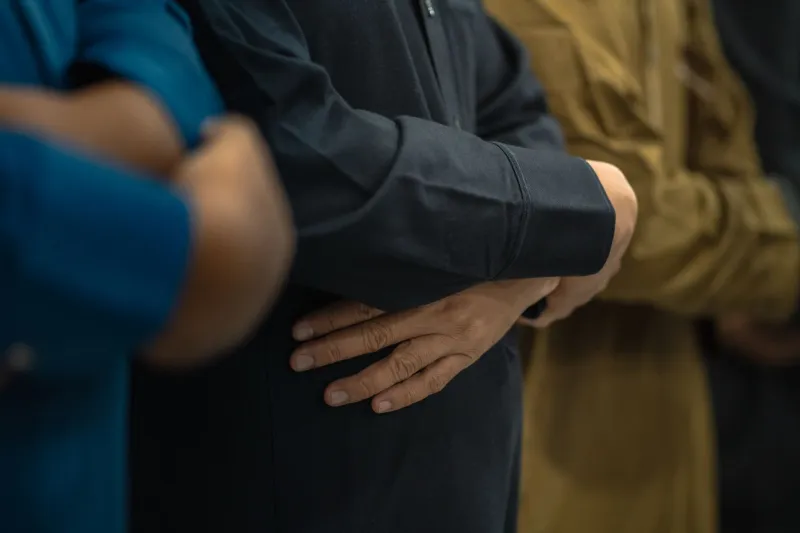
In the basement of a townhouse in Fremont, California, a group of roughly thirty Indian Muslim families gathers every Friday afternoon. There is no formal minbar, no salaried imam, and no building committee weighing in on the color of the carpet. What there is, participants say, is something increasingly difficult to find inside a conventional mosque: a sense that the space was made specifically for them.
This is not an isolated arrangement. From the suburbs of Chicago to apartment community rooms in northern New Jersey, Indian Muslim Americans are quietly establishing independent prayer spaces — informal musallas, rotating home congregations, and small-scale Islamic centers that operate entirely outside the orbit of larger, institutionally established mosques. The trend is modest in scale but significant in meaning, pointing toward a deeper renegotiation of how a specific immigrant community relates to its own religious infrastructure.
Understanding why this is happening requires looking honestly at what traditional mosque life in America has — and has not — offered the Indian Muslim community.
The Institutional Friction That Nobody Talks About
For decades, the default assumption was that a mosque was a mosque. You showed up, you prayed, you contributed to the building fund, and you accepted that the institution served a broad, theologically unified community. In practice, American mosques have always been contested spaces — shaped by the demographics, financial power, and cultural assumptions of whoever arrived first or gave the most.
For many Indian Muslims, particularly those from states like Gujarat, Kerala, Uttar Pradesh, and Hyderabad, that has often meant navigating institutions dominated by Arab or South Asian Pakistani cultural norms that felt subtly — and sometimes not so subtly — foreign. Language choices in khutbahs, the food served at community iftars, the interpretive traditions cited in Friday sermons, even the unspoken social hierarchies within mosque leadership: all of these carry cultural weight that is not religiously neutral.
"It is not that we felt unwelcome exactly," says one community organizer in the Dallas–Fort Worth metroplex who asked not to be named. "It is more that we felt invisible. Our way of practicing, our Sufi influences, our specific du'as, our Urdu — none of it had a home there."
Governance disputes have accelerated the fracture. Across multiple cities, Indian Muslim Americans describe frustrations with mosque boards that operate without transparency, resist calls for democratic accountability, or allocate resources in ways that seem to serve narrow ethnic or ideological factions. For a community that has published extensive commentary on this site about financial accountability and leadership reform within religious institutions, the response of simply walking out and building something new is, in many ways, a logical extension of that advocacy.
The Generational Fault Line
Perhaps no force is reshaping this landscape more powerfully than generational difference. Second-generation Indian Muslim Americans — those born or raised in the United States — often describe a particular kind of alienation inside traditional mosque spaces. They want religious engagement that speaks to their lived realities: navigating Islamophobia in American workplaces, building interfaith relationships, reconciling progressive politics with faith commitments, and finding Islamic frameworks that affirm rather than police their identities.
Many established mosques, shaped by first-generation immigrant sensibilities and often governed by older men with roots in more conservative theological traditions, have struggled to meet those expectations. The result is a generation that has not stopped being Muslim — in many cases they are deeply, intentionally devout — but has stopped seeing the mosque as the primary vessel for that devotion.
Independent spaces fill that gap. They tend to be more flexible in format, more willing to center women's participation, more open to theological diversity, and more attentive to the specific cultural grammar of Indian Muslim identity. A halaqah that begins with Bollywood Sufi devotional music before transitioning into Quranic study is not a compromise of faith — it is, for many participants, an expression of it.
The Practical Architecture of Independence
Building outside the institution is not without its complications. Independent prayer spaces typically lack the legal and financial infrastructure of established mosques — no 501(c)(3) status, no dedicated building, no mechanisms for long-term institutional memory. They can be vulnerable to the departure of a single energizing personality, or to the ordinary pressures of American life that make sustained community commitment difficult.
Yet organizers are finding creative workarounds. Several groups have incorporated as small nonprofits, allowing them to accept tax-deductible donations and formalize governance structures. Others have partnered with Islamic chaplaincy networks or national organizations like the Islamic Society of North America to access resources without surrendering local autonomy. A handful have quietly negotiated arrangements with sympathetic mosque boards, essentially operating as semi-autonomous cultural subunits within larger institutions.
Technology has been a quiet enabler. WhatsApp groups coordinate logistics. Zoom has made it possible for small communities to access visiting scholars and educators without the cost of bringing them in person. YouTube and podcast platforms mean that theological resources once available only inside large institutions can now reach a family gathering of fifteen just as easily as a congregation of five hundred.
What This Means for the Broader Community
The fragmentation of traditional mosque loyalty is not, on its own terms, a crisis. Religious communities have always evolved, subdivided, and reorganized around new social realities. American Christianity offers a century of precedent. What matters is whether the energy driving these new formations ultimately strengthens the broader Indian Muslim American community or disperses it into isolated pockets with diminishing collective power.
There are genuine reasons for concern on that front. Political advocacy, interfaith coalition-building, and institutional responses to anti-Muslim discrimination all benefit from consolidated community infrastructure. A movement scattered across dozens of basement musallas may be rich in authenticity and thin in leverage.
But advocates for independent spaces push back on that framing. They argue that institutions which fail to reflect their communities' actual needs do not generate real solidarity — they generate resentment and disengagement. A smaller space where Indian Muslim Americans feel genuinely seen and heard may ultimately produce more committed advocates than a large institution where they feel like guests.
Building Toward Something
The families gathering in that Fremont basement have not given up on institutional Islam. Several of them remain donors to local mosques, and a few serve on advisory boards of larger Islamic organizations. What they have given up on is the idea that their specific spiritual and cultural needs will be met by waiting for those institutions to change on their own.
That patience, they will tell you, ran out some time ago. What replaced it is something more active — a willingness to build, to organize, to define for themselves what Indian Muslim American religious life should look and feel like in this country.
That impulse, more than any theological dispute or governance disagreement, may be the most important thing happening inside the Indian Muslim American community right now. It is, at its core, the same impulse that has driven every meaningful act of community self-determination: the refusal to wait for permission to belong.