Wounds Into Weapons: How Indian Muslim Americans Are Turning Partition's Legacy Into a Force for Political Change
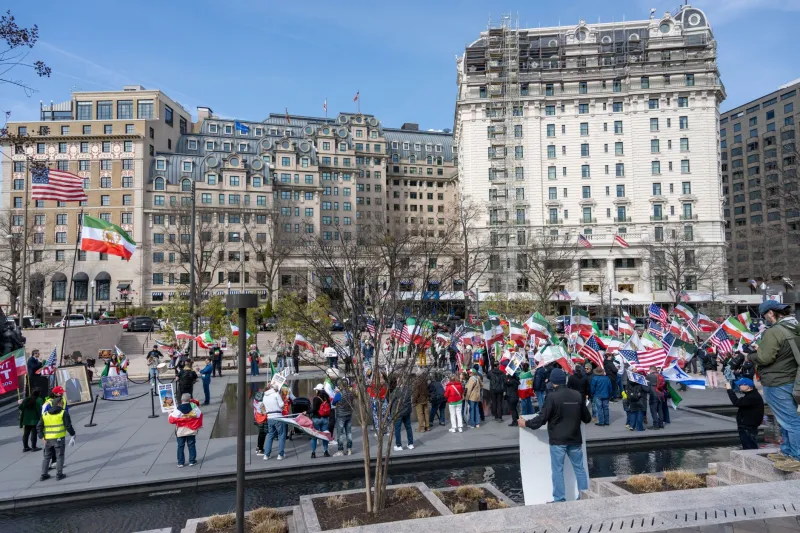
In the spring of 2023, a coalition of Indian Muslim American advocacy groups convened a symposium in the Washington, D.C. metro area that drew historians, elected officials, and community elders into the same room for a rare and charged conversation. The subject was Partition — the 1947 division of British India that displaced an estimated 14 million people and claimed hundreds of thousands of lives — and the question on the table was pointed: what does that catastrophe mean for Indian Muslim Americans trying to exercise political power in 2024?
The answer, it turns out, is increasingly strategic.
Over the past several years, a growing number of Indian Muslim American organizations have begun deliberately weaving Partition narratives into their advocacy toolkits. What was once a story whispered between grandparents and grandchildren — a private inheritance of displacement, violence, and loss — is being reframed as a usable political text. The trauma, organizers argue, is not merely historical. It is instructional.
From Private Grief to Public Platform
The shift is visible across multiple registers. Fundraising appeals reference Partition to contextualize present-day Islamophobia. Congressional testimony draws lines between the communal violence of 1947 and the targeting of Muslim minorities under India's current government. Campus organizing chapters use oral history projects to connect second-generation Indian Muslim Americans with ancestral narratives that illuminate contemporary struggles for civil rights and religious freedom.
"There is a reason our grandparents survived what they survived," said one Chicago-based community organizer who asked not to be named due to the sensitivity of ongoing advocacy work. "Part of honoring that survival is refusing to let those stories stay locked inside our families. We take them into rooms where policy is made."
This approach has found particular traction in the post-2019 political environment, after India's passage of the Citizenship Amendment Act — legislation widely criticized as discriminatory toward Muslims — renewed attention to the unfinished consequences of Partition's sectarian logic. For Indian Muslim Americans already alarmed by rising Hindu nationalism and its diaspora extensions in the United States, Partition offered a ready-made historical framework for explaining why the present moment felt so urgent.
The Historians' Caution
Not everyone is comfortable with the trajectory. Several historians and scholars who study South Asian diaspora communities have raised substantive concerns about what happens when complex historical events are compressed into advocacy messaging.
Dr. Nadia Siddiqui, a historian of modern South Asia based at a mid-Atlantic research university, puts it carefully: "Partition was not a single, unified experience. It was a catastrophe that unfolded differently across regions, classes, religions, and genders. When it gets reduced to a symbol — even a powerful one — we risk flattening the very complexity that makes the history so instructive."
Her concern is not with commemoration or even with political mobilization per se. It is with the pressure to produce a clean narrative from something that was, by its nature, irreducibly messy. Partition produced Muslim victims and Muslim perpetrators. It generated solidarity and betrayal across religious lines. It left wounds in communities that identified as neither Indian nor Pakistani in any straightforward sense. Advocacy frameworks, she notes, rarely have room for that ambiguity.
Other scholars point to the risk of what one called "trauma inflation" — the possibility that repeated invocations of historical suffering, divorced from rigorous context, can begin to function more as emotional leverage than as genuine historical reckoning. The concern is not cynical. It reflects a genuine tension between the legitimate needs of political communication and the ethical obligations of historical memory.
What the Second Generation Carries
For younger Indian Muslim Americans, the question is less abstract. Many grew up in households where Partition was a presence without a clear shape — a reason for certain silences, certain fears, certain prayers — but never fully explained. Now, as they enter adulthood and become politically active, they are being invited to claim that inheritance as identity.
Some find the invitation liberating. Fatima R., a 26-year-old graduate student in New Jersey whose maternal grandparents fled what is now Pakistan during Partition, describes the experience of connecting her family's story to broader advocacy as "a kind of integration I didn't know I needed." For her, the political use of Partition history is inseparable from personal healing. "I am not exploiting my grandmother's pain," she says firmly. "I am finally doing something with it."
Others are more ambivalent. Tariq M., a 29-year-old attorney in the Houston area, worries that the organizational deployment of Partition narratives can sometimes feel coercive — as though failing to invoke the past marks one as insufficiently committed to the community's present struggles. "I have complicated feelings about what happened to my family," he says. "I don't always want those feelings turned into a talking point."
This tension — between individual psychological complexity and the community's need for shared narrative — may be the central unresolved challenge facing Indian Muslim American advocacy organizations as they continue to develop their political identity.
The Ethics of Strategic Memory
The broader question of whether historical trauma can or should be instrumentalized for political ends is not unique to Indian Muslim Americans. African American civil rights organizations have long engaged in similar debates about the use of slavery and Jim Crow as mobilizing frameworks. Jewish American advocacy groups have navigated comparable tensions around the Holocaust's role in political discourse. In each case, the community has had to negotiate between the integrity of memory and the pragmatic demands of political engagement.
What distinguishes the Indian Muslim American moment is its relative newness as an organized political force. The community is still in the process of constructing its public identity — deciding which stories to tell, to whom, and in what register. Partition offers an extraordinarily potent source material. But potency, as any experienced advocate knows, carries its own risks.
The most thoughtful organizers in this space seem to understand the stakes. They speak of Partition not as a grievance to be weaponized but as a lens through which current threats can be seen more clearly — a way of saying, in effect, that Indian Muslim Americans have historical reasons to take seriously what others might dismiss as paranoia or exaggeration.
"We are not asking for sympathy," said one prominent East Coast advocate at a recent panel discussion. "We are asking for recognition. There is a difference. Sympathy is passive. Recognition demands a response."
A Community Still Writing Its Story
The Partition playbook, such as it is, remains a work in progress. Indian Muslim American organizations are still experimenting with how much historical weight their advocacy can bear, how much complexity their audiences can absorb, and how to honor the specificity of their community's experience without retreating into insularity.
What is clear is that the conversation itself — about memory, power, and the political uses of inherited pain — is one of the most consequential the community is having. How it resolves will shape not only the community's advocacy agenda but its understanding of who it is, and what it owes to those who came before.