Reading Between the Lines: What Indian Muslim Americans Are Learning From the Blogs That Shaped a Generation

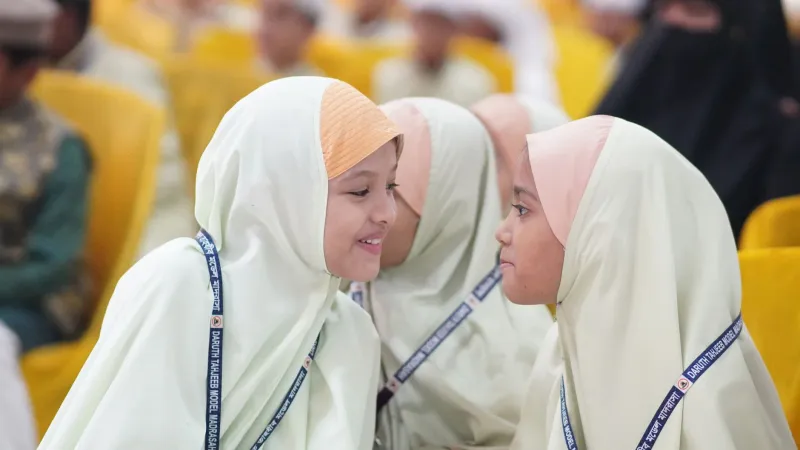
Photo by Photo by Cristine Enero on Unsplash on Unsplash
Every so often, our analytics team notices something curious: readers arriving at the site through old blog links, forum references, and shared URLs that point to articles published years ago—sometimes on platforms that no longer exist. One such path, a simple blog-read link, led us to ask a larger question. What were Indian Muslim Americans reading before they had dedicated publications of their own? And what did that reading culture build?
The answer, it turns out, is the foundation of everything this site now represents.
The Blog Era That Raised a Diaspora
Long before Indian Muslim Americans had institutional media representation, they had blogs. In the mid-2000s and early 2010s, first-generation immigrants and their American-raised children turned to personal websites and anonymous writing platforms to process experiences that mainstream media refused to cover: workplace discrimination that went unreported, the alienation of being the only Muslim in the room, the quiet grief of watching headlines from India with a sense of helplessness.
These were not professional publications. They were living-room conversations broadcast to whoever needed to hear them. A mother in New Jersey writing about raising hijab-wearing daughters in a post-9/11 America. A software engineer in the Bay Area unpacking what it meant to code by day and organize voter registration drives by night. A student in Chicago chronicling the search for a mosque that welcomed questions as much as prayers.
Why Anonymous Writing Mattered
For a community navigating multiple layers of scrutiny—religious, ethnic, and political—anonymity was not cowardice. It was strategy. Many early bloggers wrote under pen names precisely because the stakes were real: jobs, visas, and family reputations hung in the balance.
Yet the honesty of that writing became its own form of advocacy. When a reader in Houston discovered that someone in Detroit shared their exact struggle, the isolation began to crack. Comment sections became informal support networks. Blogrolls became directories of trust. What looked like scattered personal journals was, in retrospect, the scaffolding of a community infrastructure.
From Personal Essays to Public Power
The trajectory from those blogs to today's organized advocacy is unmistakable. The writers who once hashed out identity questions in comment threads now run nonprofit boards, sit on interfaith councils, and coordinate get-out-the-vote efforts in swing states like Michigan and Georgia. The muscle memory of storytelling—of naming an experience before institutions acknowledged it—carried directly into political organizing.
Consider how the community now engages with American civic life. Voter education drives among Indian Muslim Americans routinely draw on narratives first tested in blog posts a decade ago. The framing of "triple consciousness"—Indian, Muslim, American—that scholars now write about in journals began as a recurring motif in diaspora blogging.
What the Digital Archive Teaches Us
There is a preservation challenge here that deserves attention. Many of those early blogs have gone dark as platforms shut down or writers stepped away. Community organizations in Chicago, the Bay Area, and New York have begun discussing informal archiving projects, recognizing that these writings constitute a primary historical record of a community finding its footing.
For younger Indian Muslim Americans, the archive offers something textbooks do not: the unfiltered interior lives of their parents' generation. Reading a 2009 blog post about a father's hesitation to attend a school board meeting, or a mother's decision to finally file a workplace complaint, provides context for the freedoms and confidence the next generation now exercises.
The Reader as Community Builder
It is worth remembering that blog culture was never only about writers. Readers shaped it—through comments, through emails sent to authors, through links shared in family group chats and forwarded to relatives in Hyderabad or Lucknow. The act of reading was itself a bridge between generations and geographies.
That readerly tradition continues here. Every visit to an article, every story shared with a neighbor, every debate sparked at a community iftar—these are the modern inheritors of that blog-era conversation.
Writing the Next Chapter
If the blog era taught Indian Muslim Americans to name their experiences, the current moment demands more: to publish, to organize, and to hold institutions accountable. This site exists because that earlier generation of readers and writers proved there was an audience hungry for honest reflection.
So when a reader follows an old link, however obscure, and lands on these pages, we see it as continuity rather than accident. The conversation that started in anonymous living-room blogs now happens in the open—in newsrooms, in city councils, in congressional testimony. But its origins deserve honor.
The blogs are mostly gone. The readers they created are not. And they are, increasingly, the ones writing the story now.